


Wrist injuries are among the most common injuries in many sports. Tennis players are especially prone to wrist injuries because tennis involves repetitive wrist motions, such as swinging the racket back and forth and serving the ball.
If you play tennis and want to prevent or treat a wrist injury, a tennis wrist guard can be helpful. In this article, we’ll explore the key things you need to know about tennis wrist guards.
What is a Wrist Guard in Tennis?
A tennis wrist guard, also known as a tennis wrist support or tennis wrist brace, can help protect the wrist against injury by supporting the wrist joints.
A wrist guard is designed to absorb the impact generated when playing tennis, thus preventing the range of motion of your wrist to avoid dislocation, torn ligaments, impact bruises, or wrist fractures.
The wrist guard is designed in moulded plastic to cover both the front and back of the wrist.
Does a Wrist Support Help in Tennis?

While a tennis wrist support won’t give you an added advantage on the tennis court, it can help you in various ways. A wrist guard is designed to prevent wrist injuries but it can also help you by:
Treating mild wrist injuries by limiting wrist movement
Alleviating wrist pain or soreness
Allowing minimal wrist use during recovery
How Do You Stop Tennis Wrist Pain?
If you’re experiencing wrist pain due to tennis, a tennis wrist guard can provide some relief. Besides wearing a wrist guard, performing the Rest, Ice, Compression, and Elevation (RICE) treatment or taking painkillers can help to stop wrist pain.
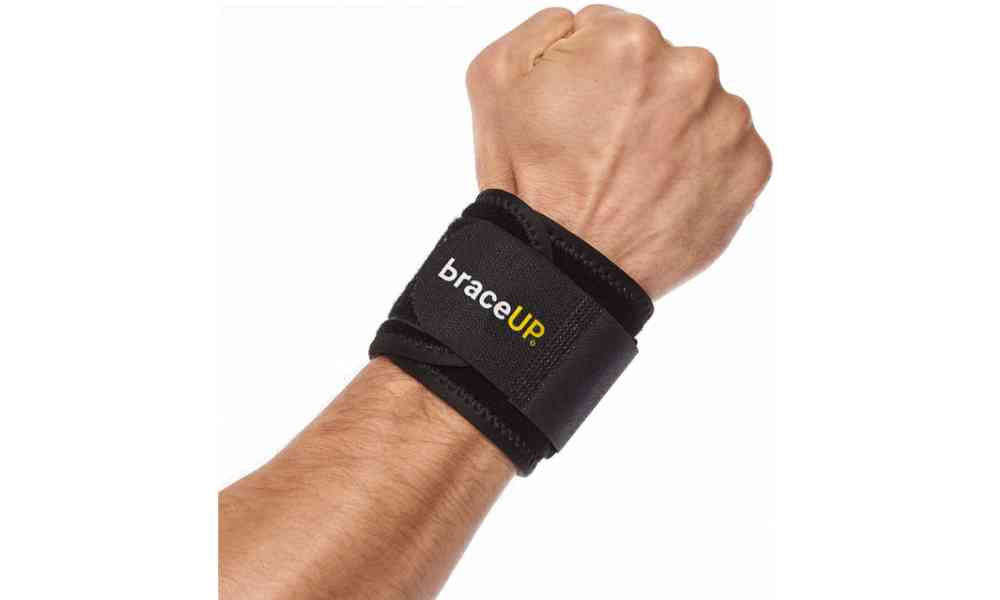
Use this wrist support to protect and stabilize your wrist while playing tennis.
Fully adjustable for a custom fit to your wrist.
How Else Can You Avoid Tennis Wrist Injuries?
Performing Wrist Exercises
Tennis wrist injuries can be excruciatingly painful. If you want to prevent injuries, you should consider doing wrist strengthening exercises. Some exercises that can strengthen your wrist joints include the prayer stretch, wrist curl, and wrist flexor stretch.
Choose the Right Racket
Many old rackets are bulky, while newer models are generally lighter. If you have an old racket, consider getting a new one to put less strain on your wrist as you swing the racket or serve the ball. Besides the racket weight, get a racket with a comfortable grip to avoid putting unnecessary strain on your wrist as you hold the racket.
Learn Proper Technique
Many tennis injuries are often caused by improper technique, such as serving the ball inappropriately or grasping the racket too tight. If you aren’t sure about your technique, consider training with a tennis trainer or professional or look up training videos on YouTube to learn the proper techniques.
Warm-Up Before Matches
Ensure you do light jogging or callisthenics before matches to stimulate blood flow to your muscles. While seated, bend your arm at the elbow to form a right angle. Then make a fist and relax and stretch your fingers repeatedly. Repeat the process for both arms. This is an easy way to warm up your wrists but you should look up more elaborate exercises.
When to Use a Tennis Wrist Guard
You can use a tennis wrist guard to prevent wrist injuries, alleviate wrist pain, and treat wrist injuries. However, consult your doctor or physical therapist before you start wearing one.
And if you do start wearing one, bear in mind that it could take some time for you to get used to playing with it. Thus, make sure you wear it during practice and informal play to get a feel for it before playing competitive matches.